
The placenta
Giving birth to a new baby is about more than just active labor, contractions and pushing. For the last 40 weeks, the baby has survived in the womb thanks to the placenta. This blood-rich pseudo-organ must pass out of the vagina after the baby is born. However, before it can pass, it must first detach from interior uterine tissue. Contractions will continue as the placenta detaches and moves through the vaginal canal and out the vagina.
Pushing out the placenta
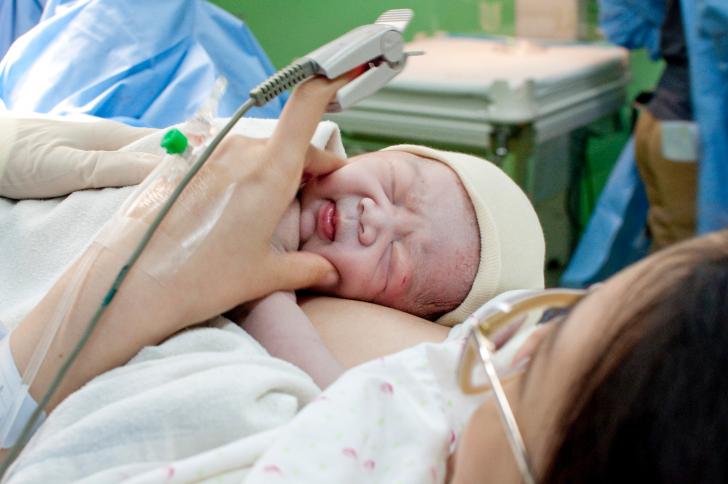
Pushing the placenta out of the uterus takes a few moments. The first few contractions actually detach the placenta and the final contraction pushes the placenta out. When the baby is born, the umbilical cord is eventually clamped and cut, and it is recommended is to do delayed cord clamping for several minutes after birth as long as the baby is stable. You do not have to wait after delivery to place the baby on mom's belly but you can do this immediately after birth if the baby is stable. The placenta will come out next. Once out of the body, the placenta is placed in a container. Occasionally, the placenta is sent to pathology for further examination. The remaining tissue is usually thrown out as medical waste.
Read More:
Stages of Labor
Labor and Delivery Guide
Labor Contractions Counting Calculator