
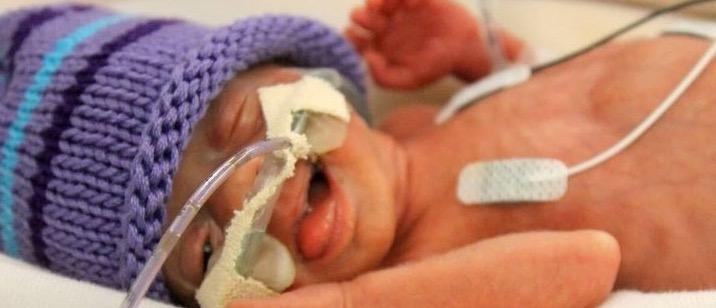
Why one is better than two (or 3)
While getting ready for the pregnancy having a baby using in vitro fertilization (IVF) or how much cycles of IVF cost, your concerns should also be focused on the baby's health. These concerns are common and may lead you to think about transferring more than one embryo during your IVF procedure. However, transferring more than one embryo increases your chances of having twins or more. Twin pregnancy is risky, both for babies and mother, whether or not IVF is used.
There is a significantly increased risk of many pregnancy complications in twin and triplet pregnancies both to mothers and babies when compared to singletons. These risks are often 4-times or more higher than if you carry a single baby.
At present, about 1 in 4 IVF or ICSI (in-vitro fertilization or intra-cytoplasmic sperm injection) pregnancies leads to a multiple birth. This means that after IVF/ICSI, you are around 20 times more likely to have a multiple pregnancy than you would be if you’d conceived naturally. Other fertility treatments, such as drugs and intrauterine insemination (IUI) can also increase the risk.
- Almost 3 out of 5 twin babies are born preterm, early 6 times as likely as single babies.
- About 1 out of 4 twin babies are admitted to the neonatal intensive care unit (NICU) more than 5 times as likely as single babies.
- About 7 out of 1,000 twin babies have cerebral palsy more than 4 times as likely as single babies.
- Twin babies are more likely to be stillborn, experience neonatal death, have birth defects of the brain, heart, face, limbs, muscles, or digestive system, and have autism than single babies.
- Women carrying twins are twice as likely to get pregnancy-related high blood pressure as women carrying single babies.
- Women carrying twins are 1.5 times as likely to get gestational diabetes as women carrying single babies.
The best way to reduce the chance of twins from IVF is to reduce the number of embryos transferred.
Why are twins and triplets at greater risk of problems?
The health risks for twins and triplets are greatly increased compared with those for singletons mostly because multiples have a higher chance of malformations, and also tend to be born prematurely and underweight. The risk of early and late miscarriage is also higher for twins than for singleton pregnancies.
The chance of a single embryo dividing and resulting in identical twins is higher after IVF though it is not yet known why this happens. So it is possible to end up with identical twins from a single transferred embryo, or triplets from two embryos.
There are two kinds of twins: monochorionic and dichorionic twins. Monochorionic twins, those who share a placenta are at additional significant risks as they identical babies share a placenta and are at even higher risk from complications during pregnancy than dichorionic twins, such as twin-to-twin transfusion syndrome, which can cause serious health problems and death.
If a multiple pregnancy is thought to be a serious health threat to mother or babies, the clinician may suggest a fetal reduction. This involves aborting one or more of the fetuses.
Premature Birth: the Facts
Many twins and triplets are born prematurely, meaning that these babies are born before the normal time for healthy singleton babies:
- Singleton babies are usually carried for about 40 weeks and tend to have normal birth weights.
- At least half of twins are born before 37 weeks and with low birth weights, making them at high risk of serious health problems and death. Many are born before 35 weeks, when they often need neonatal care. Their birth weight is around 800–1000g less than singletons.
- Over 90% of triplets are born before 37 weeks and many are born so early that they have a greater risk of long-lasting, serious health problems or may die soon after birth.
One big determinant of possible pregnancy complications is whether the twins share the same placenta or have a separate placenta. Twins that share the same placenta (monochorinionic-diamniotic) are at much higher risk of complications that twins which do not share a placenta (dichorionic-diamniotic).
The most common complications to mother or babies associated with multiples are:
- Preterm Labor/Delivery
- Low birth weight
- Intrauterine Growth Restriction (IUGR)
- Preeclampsia
- Gestational Diabetes
- Placental Abruption
- Fetal Demise/Loss
- Cesarean Section (c-section)
- Twin-to-Twin transfusion
Risks to the Babies
Developmental Problems
Disabilities in twins are more common, mainly but not entirely due to prematurity and low birthweight complications. Complications are usually 4-times or more higher in twins when compared to singletons.
Cerebral Palsy Rate per 1000 livebirths*
| Singletons | 1.6 |
| Twins | 7.4 |
| Triplets | 26.7 |
*Western Australia figures
Preterm Labor/Delivery
Preterm labor/delivery is defined as delivery before 37 completed weeks of pregnancy. Almost 60% of twins are delivered preterm, while 90% of triplets are preterm. The length of gestation decreases with each additional baby. On average most single pregnancies last 39 weeks, twin pregnancies 36 weeks, triplets 32 weeks, quadruplets 30 weeks, and quintuplets 29 weeks. Higher order pregnancies are almost always preterm. Many times premature labor is a result of preterm premature rupture of the membranes (PPROM). PPROM is rupture of membranes prior to the onset of labor in a patient who is at less than 37 weeks of gestation.
Low Birth Weight
Low birth weight is less than 5.5 pounds (2,500 grams). Babies born before 32 weeks and weighing less than 3.3 pounds (1,500 grams) have an increased risk of developing complications as newborns. They are at increased risk for having long-term problems such as mental retardation, cerebral palsy, vision loss, and hearing loss.
Intrauterine Growth Restriction (IUGR)
Multiple gestations grow at approximately the same rate as a single pregnancy up to a certain point. The growth rate of twin pregnancies begins to slow at 30 to 32 weeks. Triplet pregnancies begin slowing at 27 to 28 weeks, while quadruplet pregnancies begin slowing at 25 to 26 weeks. IUGR seems to occur because the placenta cannot handle any more growth and because the babies are competing for nutrients. Your doctor will monitor the growth of your babies by ultrasound and by measuring your abdomen.
Risks to the mother from Multiple Births
The risks to mothers from multiple pregnancy and birth range from the mild to the potentially life-threatening.
Risks During Pregnancy
During pregnancy, mothers of twins are at greater risk of various serious health problems, as well as the risk of losing their babies.
- The risk of early and late miscarriage is higher for mothers of twins than for mothers of singleton pregnancies.
- 20% of mothers carrying twins suffer from pregnancy-induced hypertension (high arterial blood pressure), compared to only 1–5% of mothers of singletons.
- The risk of preeclampsia is up to 30% for twin pregnancies compared to 2–10% in singleton pregnancies.
- The likelihood of women who are pregnant with twins developing gestational diabetes is up to 12% compared to only 4% for mothers with singleton pregnancies. Although the risks to the mother are fairly mild, gestational diabetes can increase the risk of the death to the unborn child or newborn baby.
- If a multiple pregnancy is thought to be a serious health threat to mother or babies, the clinician may suggest a fetal reduction. This involves aborting one or more of the fetuses.
Risks During or After Birth
During birth, mothers of twins are more likely to require intervention, more likely to experience serious problems and more likely to die , receive blood transfusions, or get sick than mothers of singletons.
- Cesarean section (C-section) is very common among twin births because complications with the birth are more likely with twins – for example, one or both babies are in a breech position.
- The risks of a range of other problems such as hemorrhage and anemia are also higher in twin births.
- The risk of the mother dying is twice as high during twin pregnancy or birth.
- Multiple births also carry the risk that, after the baby is born, the new mother will be at greater risk of stress and postpartum depression.
- If you have a history of infertility, you are more likely to find being a parent stressful and it’s more likely to affect your health, even if you are a singleton first-time mother compared to naturally conceiving first-time mothers or mothers with a history of infertility who already have children.
Even the less serious problems may result in the mother spending longer periods in hospital than would normally be necessary. You may have to spend the last weeks of your pregnancy in hospital, and the birth may have to be induced early.
Preeclampsia
Preeclampsia, Pregnancy Induced Hypertension (PIH), Toxemia, and high blood pressure are all synonymous terms. Twin pregnancies are twice as likely to be complicated by preeclampsia as single pregnancies. Half of triplet pregnancies develop preeclampsia. Frequent prenatal care increases the chance of detecting and treating preeclampsia. Adequate prenatal care also decreases the chance of a serious problem resulting from preeclampsia for both the babies and mother.
Gestational Diabetes
The increased risk for gestational diabetes in a multiple pregnancy appears to be a result of the two placentas increasing the resistance to insulin, increased placental size, and an elevation in placental hormones. The occurrence of gestational diabetes in a multiple pregnancy is still being tested at this time. In one study, an increased risk of gestational diabetes did seem to be apparent, but the doctors involved recommended that further testing be conducted.
Placental Abruption
Placental abruption is three times more likely to occur in a multiple pregnancy. This may be linked to the fact that there is an increased risk of developing preeclampsia. It most often occurs in the third trimester, but the risk significantly increases once the first baby has been delivered vaginally.